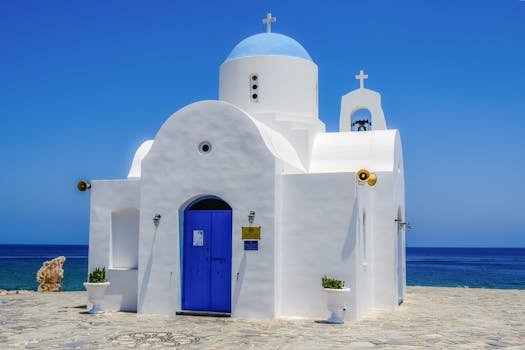
Chypre, située au carrefour de l’Europe, de l’Asie et de l’Afrique, est une île aux multiples influences culturelles. Son histoire riche remonte à l’Antiquité, avec des civilisations successives comme les Grecs, les Romains, les Byzantins, les Ottomans et les Britanniques. Cette diversité historique a façonné la culture chypriote, où les traditions grecques orthodoxes cohabitent avec des influences méditerranéennes et moyen-orientales. Chypre est aujourd’hui une destination touristique populaire, connue pour ses plages, ses villages pittoresques, et son héritage culturel impressionnant. Le pays célèbre de nombreux festivals, où la musique, la danse et la cuisine occupent une place centrale.
Chypre est une île où l’histoire ancienne se mêle à une culture contemporaine vibrante, offrant un cadre unique pour les visiteurs.
Gastronomie Traditionnelle et Options Sans Gluten
La cuisine chypriote est un mélange de saveurs méditerranéennes et moyen-orientales, avec une grande variété de plats à base de légumes frais, de viandes grillées et de produits laitiers. Heureusement, de nombreux plats traditionnels sont naturellement sans gluten, faisant de Chypre une destination idéale pour les personnes suivant un régime sans gluten.
Voici quelques plats chypriotes naturellement sans gluten :
- Souvla : De gros morceaux de viande (agneau, porc ou poulet) grillés lentement à la broche, souvent servis avec des légumes grillés. Ce plat est naturellement sans gluten.
- Sheftalia : Des saucisses de viande hachée épicée enveloppée dans une membrane naturelle, grillées et servies avec des légumes. Un plat naturellement sans gluten.
- Halloumi grillé : Ce célèbre fromage chypriote est souvent grillé et servi en entrée ou en accompagnement. Il est naturellement sans gluten.
- Koupepia : Des feuilles de vigne farcies au riz et à la viande, un plat traditionnel et naturellement sans gluten.
Ces plats chypriotes sont un excellent moyen de découvrir les saveurs locales tout en respectant un régime sans gluten.
Les Incontournables à Visiter à Chypre
Chypre est une île pleine de merveilles naturelles et historiques à explorer. Voici quelques sites incontournables à visiter lors de votre séjour :
- Nicosie : La capitale de Chypre est la seule ville divisée en deux au monde, avec une partie grecque et une partie turque. Elle offre une richesse culturelle et historique fascinante, avec des musées et des marchés à découvrir.
- Paphos : Classée au patrimoine mondial de l’UNESCO, cette ville est célèbre pour ses mosaïques romaines, ses tombeaux royaux et ses légendes liées à la déesse Aphrodite.
- Montagnes du Troodos : Cette chaîne montagneuse abrite des monastères byzantins, des villages traditionnels et des sentiers de randonnée, parfaits pour les amoureux de la nature.
- Larnaca : Célèbre pour ses plages, son église Saint-Lazare et ses ruines antiques, cette ville côtière est une destination relaxante et culturelle.
Ces lieux offrent un aperçu de la richesse historique et naturelle de Chypre, où chaque visiteur peut trouver son bonheur.