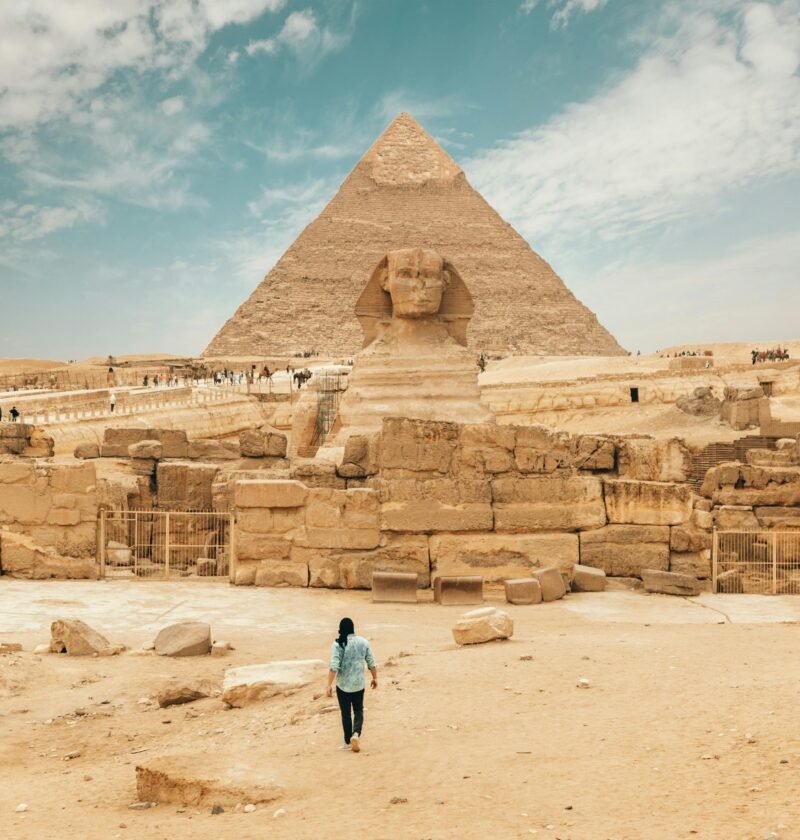
Egypt, the cradle of one of the world's oldest civilizations, is renowned for its iconic monuments such as the Pyramids of Giza, the Sphinx, and the temples of Luxor and Karnak. Located at the crossroads of Africa and the Middle East, Egypt flourished along the Nile River, which was essential to the development of its culture and agriculture. The history of ancient Egypt is marked by dynasties of pharaohs, complex gods, and impressive advancements in art, science, and architecture. Today, modern Egypt retains a rich heritage blending Islamic, Coptic Christian, and ancient traditions.
Egypt is a captivating destination where millennia-old history and modern life coexist, offering travelers a unique blend of culture, art, and heritage.
Traditional Gastronomy and Gluten-Free Options
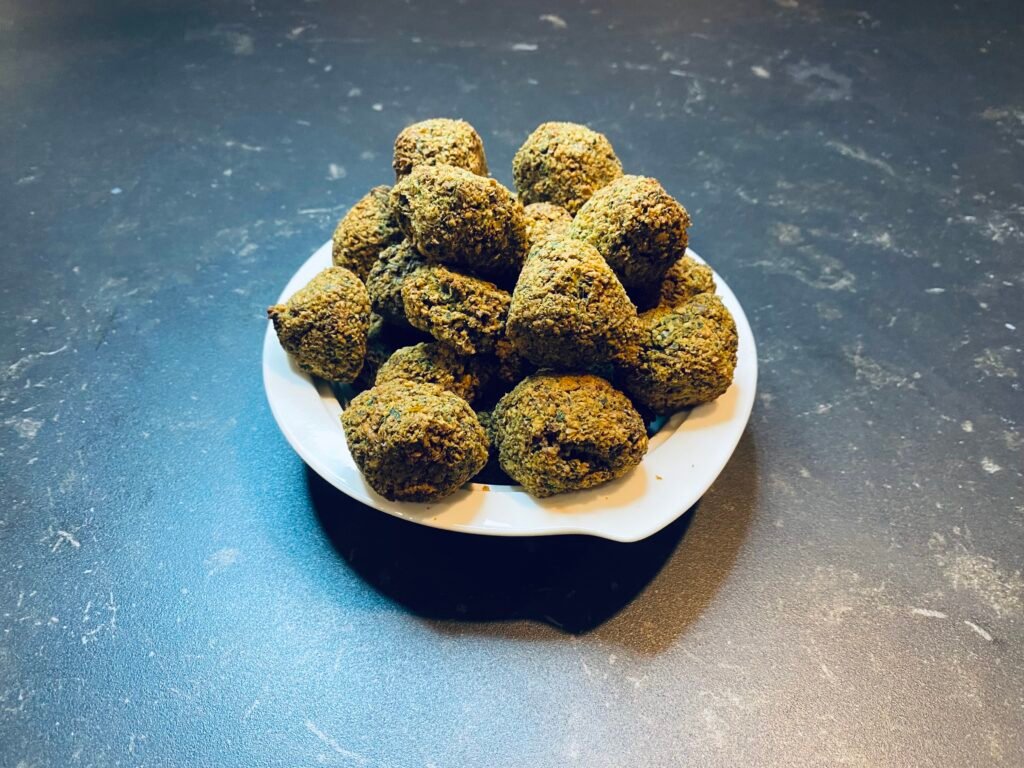
Egyptian cuisine is rich and varied, influenced by its local resources and historical connections with other Mediterranean and Middle Eastern cultures. It relies on simple yet flavorful ingredients such as legumes, vegetables, and spices. While some dishes include bread, many traditional dishes are naturally gluten-free.
Here are some Egyptian dishes that are naturally gluten-free:
- Koshari (adapted version) : A national dish of rice, lentils, and chickpeas, usually served with a spicy tomato sauce and fried onions. For a gluten-free version, simply replace the traditional pasta with gluten-free pasta or omit it altogether.
- Molokhia : A stew made from simmered jute leaves, often served with chicken or rabbit and accompanied by rice.
- Foul Medames : A dish of simmered broad beans, often eaten for breakfast, seasoned with lemon, olive oil and cumin.
- Mahshi : Stuffed vegetables (such as vine leaves, peppers or courgettes) with rice and herbs.
These dishes illustrate the richness of Egyptian cuisine, which can be enjoyed even on a gluten-free diet.
Must-See Attractions in Egypt
Egypt is full of historical wonders and breathtaking landscapes. Here are some must-see sites:
- Pyramids of Giza : The only ancient wonders still standing, this impressive site is a must-see for any traveler.
- Valley of the Kings : Near Luxor, this collection of royal tombs houses the treasures of the pharaohs, including the tomb of Tutankhamun.
- Cairo : The capital, with its Egyptian Museum overflowing with artifacts and its famous Muhammad Ali Mosque.
- Aswan and the Abu Simbel temple : A spectacular site dedicated to Ramses II, carved into the rock and overlooking Lake Nasser.
These places allow you to discover Egypt's ancient heritage while appreciating its contemporary culture.