From the Anti-Atlas to Agadir, via Tafraoute and the Aït Mansour Gorges
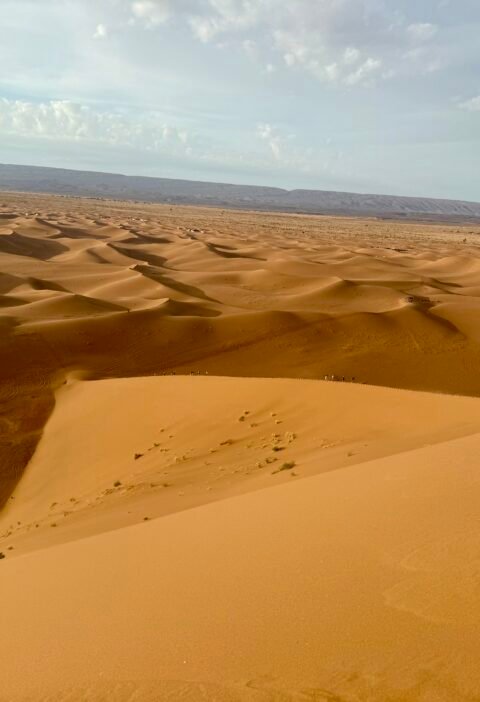
Our family adventure in southern Morocco was slowly drawing to a close, but I had high hopes for this final leg. I was a little apprehensive about the roads, but in the end, everything went smoothly. We were right to have turned back from our desert trip because, even though the weather was superb on the morning of our departure, it quickly changed, and a severe hailstorm hit near Zagora. It destroyed hectares of watermelon plantations. If we had taken the other route, which was our initial plan, we wouldn't have been able to get through. It just goes to show how quickly the weather can change, and roads that are generally quite good can become impassable in bad weather. After immersing ourselves in the magnificent Chegaga dunes, we crossed the Anti-Atlas Mountains to Tafraoute , a renowned center for pink granite, before returning to Agadir via the Aït Mansour Gorge , the Tigouzane Kasbah, and Aït Baha . This final leg of our journey was full of contrasts, wilder than the beginning of our trip: we encountered very few cars on the road, and I must admit it was quite pleasant. We were delighted to have chosen this route.
The Anti-Atlas: The Wild Road from Foum Zguid to Tafraoute
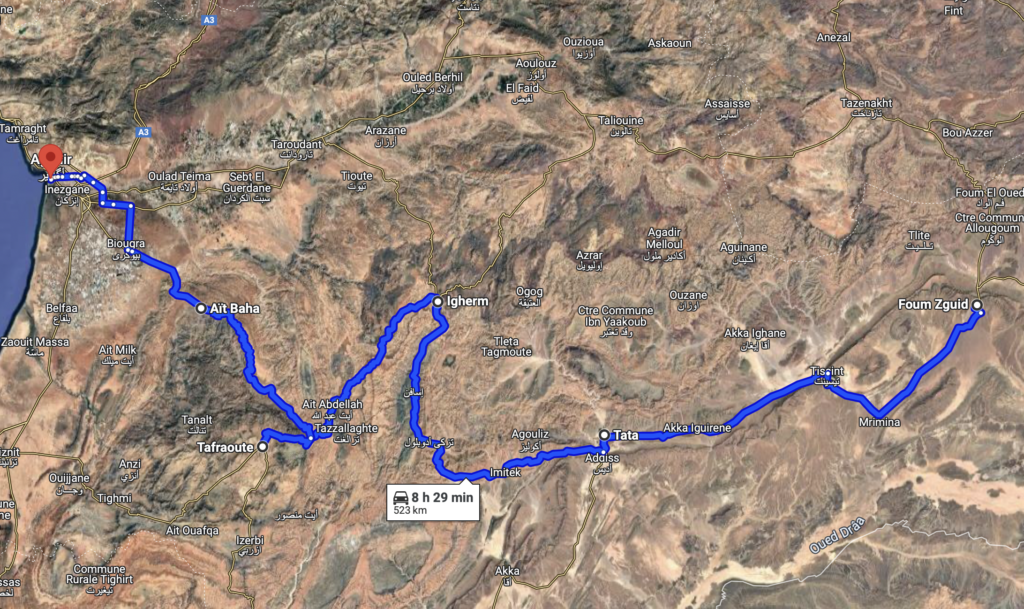
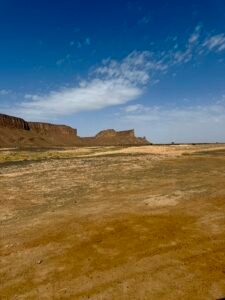
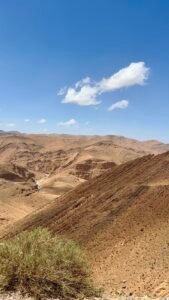
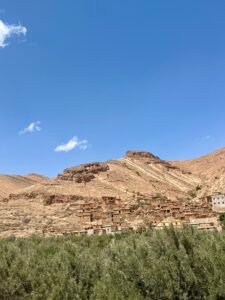
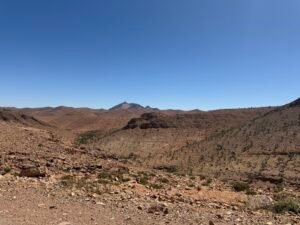
After our early return from the desert to Foum Zguid , we got back in our car for a long but splendid drive to Tafraoute , passing through Tata and Igherm . The road winds between desert plateaus , steep gorges , and Berber villages built of adobe . We stopped at the Tata market to buy supplies for a picnic. The town itself isn't particularly interesting, but we found it to have a vibrant local life and few tourists.
The contrast between the aridity of the first few kilometers and the pink mountains of Tafraoute is striking. Arriving at the village, nestled amidst a jumble of granite rocks, marks a turning point in the landscape: more poetic, more mineral, a very pleasant surprise.
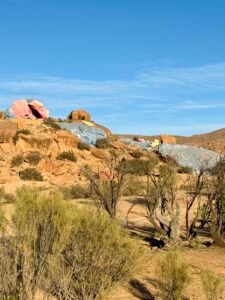
The Painted Rocks of Tafraoute: an unforgettable sunset
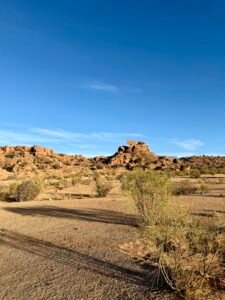
At the end of the day, we went to admire the Painted Rocks , a monumental work by the Belgian artist Jean Vérame. In the 1980s, he transformed these natural granite boulders into an open-air gallery , painted in blue, pink, and white. You either love it or you hate it. But we found the area very beautiful.
The sunset over this lunar landscape was magical. The colors shifted to orange, the shadows cast strange shapes on the rocks, and the atmosphere was almost otherworldly. Our son amused himself by climbing on the boulders while we captured this unique light.
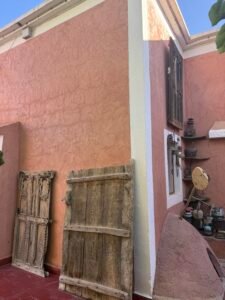
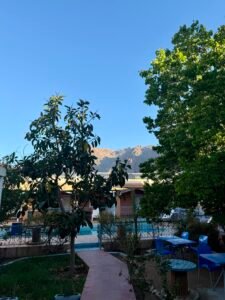
Late in the evening, we returned to our hotel: L'Arganier. A charming little hotel with a lovely pool, perfect after the long drive we had made from Foum Zguid. We had deliberately chosen a hotel outside the city center, and I think we made the right choice because the quiet allowed us to have a peaceful night. Moreover, the evening tagine was delicious.

Aït Mansour Gorges: a hidden oasis
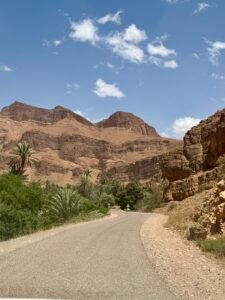
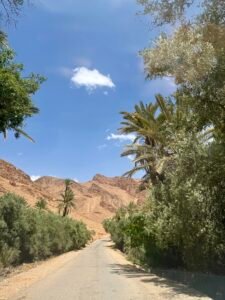
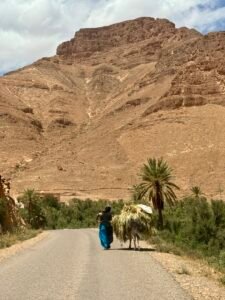
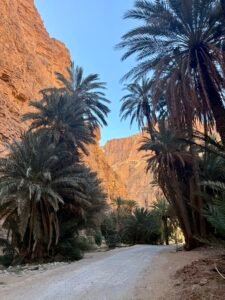
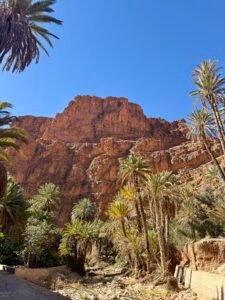
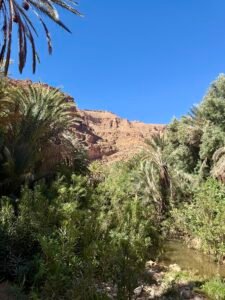
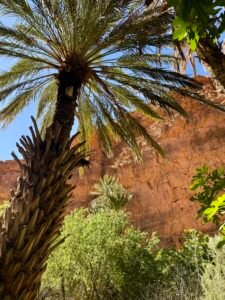
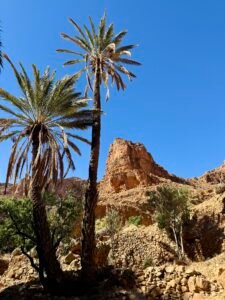
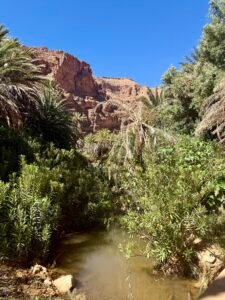
The next morning, we took a spectacular little road to reach the Aït Mansour Gorges , about thirty kilometers from Tafraoute. This verdant canyon lush palm grove at its heart .
We took a walk among the palm trees, along the small irrigation canals. The contrast between the red rock walls and the coolness of the oasis gives this place a unique charm.
On the road to Agadir: stop at the Kasbah Tigouzane
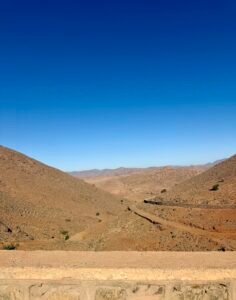
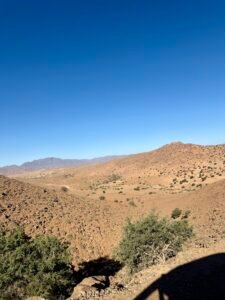
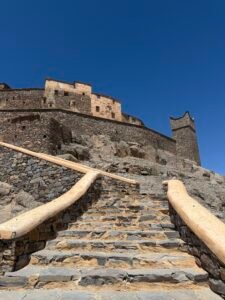
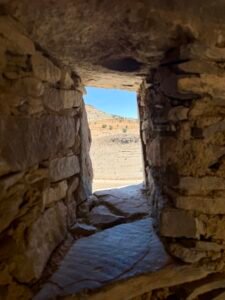
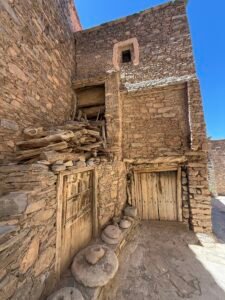
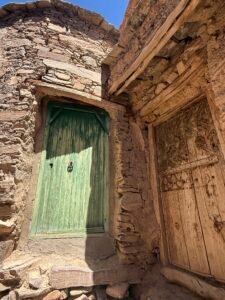
Leaving Aït Mansour for Agadir , we made an unexpected but delightful stop at the Kasbah Tigouzane . Perched on a hilltop, this ancient fortress overlooks a rugged landscape typical of the Anti-Atlas Mountains. The Kasbah is beautifully restored. There are a few rooms and a restaurant, but we only paid a few dirhams for the visit and enjoyed an orange juice up on the hill.
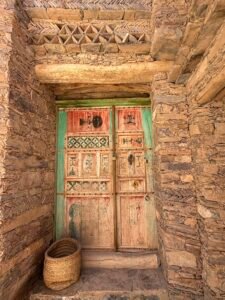
Rarely visited, it retains an authentic and unspoiled atmosphere . We explored its earthen walls, climbed to its heights to enjoy the panoramic view, and imagined the life that once unfolded there. It's one of those hidden gems that only curious travelers discover by chance… but it's truly worth a visit.
Return to Agadir via Aït Baha: the end of an unforgettable journey
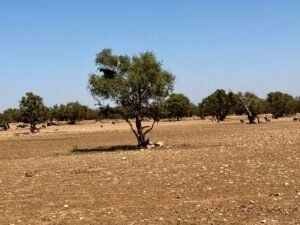
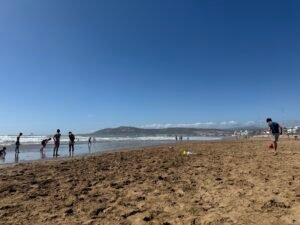
The last stretch of road, via Aït Baha , gradually brought us back to civilization. As we descended towards the coast, the mountains gave way to hills, then to the first cultivated fields. We reached Agadir in the late afternoon, a little tired but with beautiful images in our heads. I was delighted to spot goats in the argan trees: I had been looking for them since the beginning of our trip because it was a childhood memory that had stayed with me during a trip to the region with my parents. But generally, you see these goats more around Essaouira: we were lucky to come across some. Agadir won't be a place I'll remember, but it was simply a stopover. The city was destroyed by an earthquake in 1960, so it no longer has any soul. Tourists come for the beach, the sun, and the golf. It's better to spend time around Essaouira, which is much more charming.
After that last night by the ocean, in the Timoulay hotel, we took our early morning , with our heads full of memories, sand in our shoes, and already wanting to come back.
One last word: southern Morocco, an experience not to be missed
This family road trip in southern Morocco is truly worthwhile: we discovered a deep, welcoming, and spectacular Morocco. From the kasbahs of Ait Ben Haddou to the dunes of Chegaga , from the Valley of Roses to the rocks of Tafraoute , we were blown away and experienced a wonderful human and sensory adventure: so don't hesitate! You'll have an unforgettable time.
👉 Planning a road trip in Morocco? Leave a comment below or ask me your questions – I'd love to share our tips and advice for families!