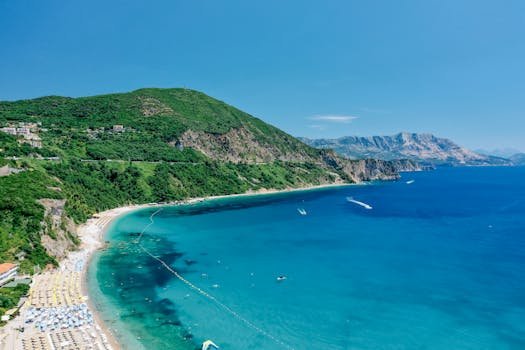
Montenegro, a small Balkan country nestled between the Adriatic Sea and the Dinaric Alps, has a rich and eventful history. Its geographical location has made it a crossroads of civilizations, influenced by the Ottoman Empire, the Republic of Venice, and more recently, the former Yugoslavia. After the collapse of Yugoslavia in the 1990s, Montenegro finally gained its independence in 2006. Today, the country is a rising destination for travelers, drawn by its dramatic mountains, tranquil lakes, and picturesque coastal towns. Montenegrin culture is a blend of Slavic and Mediterranean traditions, with cultural festivals, folk dances, and a deep connection to nature.
Montenegro offers a unique experience combining the historical heritage of the Balkan region and the unspoiled natural beauty of its landscapes.
Traditional Gastronomy and Gluten-Free Options
Montenegrin cuisine is influenced by its Balkan and Mediterranean neighbors, with a strong presence of grilled meats, fresh vegetables, and fish dishes. While some traditional dishes may contain gluten, many naturally gluten-free options are available, thanks in part to the use of ingredients like potatoes, rice, and fresh vegetables.
Here are some Montenegrin dishes that are naturally gluten-free:
- Raštan : A dish made with green cabbage, slowly cooked with pork or beef, and served with potatoes. This traditional dish is naturally gluten-free.
- Ćevapi : Small grilled meat sausages, usually served with grilled onions and vegetables. This dish is naturally gluten-free if eaten without bread.
- Kacamak : A rustic dish of mashed potatoes and corn, often served with sheep's cheese. A naturally gluten-free option.
- Seafood risotto : On the Montenegrin coast, seafood is a must, and risotto dishes, often accompanied by mussels or shrimp, are naturally gluten-free.
These dishes demonstrate the simplicity and robustness of Montenegrin cuisine, while also being suitable for gluten-free diets.
Must-See Attractions in Montenegro
Montenegro is a dream destination for lovers of nature, history, and adventure. Here are some must-see sites to visit during your stay:
- Kotor : This fortified city, situated in a magnificent bay, is a UNESCO World Heritage Site. Its medieval streets, Venetian architecture, and mountains in the background make it an unmissable destination.
- Durmitor National Park : A paradise for outdoor enthusiasts, with opportunities for hiking, skiing and rafting in the Tara River canyon, one of the deepest in Europe.
- Lake Skadar : This lake, the largest in the Balkans, is a sanctuary for wildlife, including migratory birds, and offers scenic cruises on its calm waters.
- Budva : Famous for its beaches and fortified old town, Budva is a popular seaside resort that blends history and modernity, with a lively nightlife.
These places illustrate the wild beauty and natural diversity of Montenegro, an ideal destination for a trip that balances relaxation and exploration.