Part 1: Lima, Arequipa and exploration of the Colca Canyon
Last summer, in July 2025, we took a wonderful two-week trip to Peru. For many years, we hadn't been able to travel with our three children because the two older ones, one a student and the other working, were never available at the same time. But this time, all three of our sons (15, 20, and 22 years old) were able to join us: what a joy!
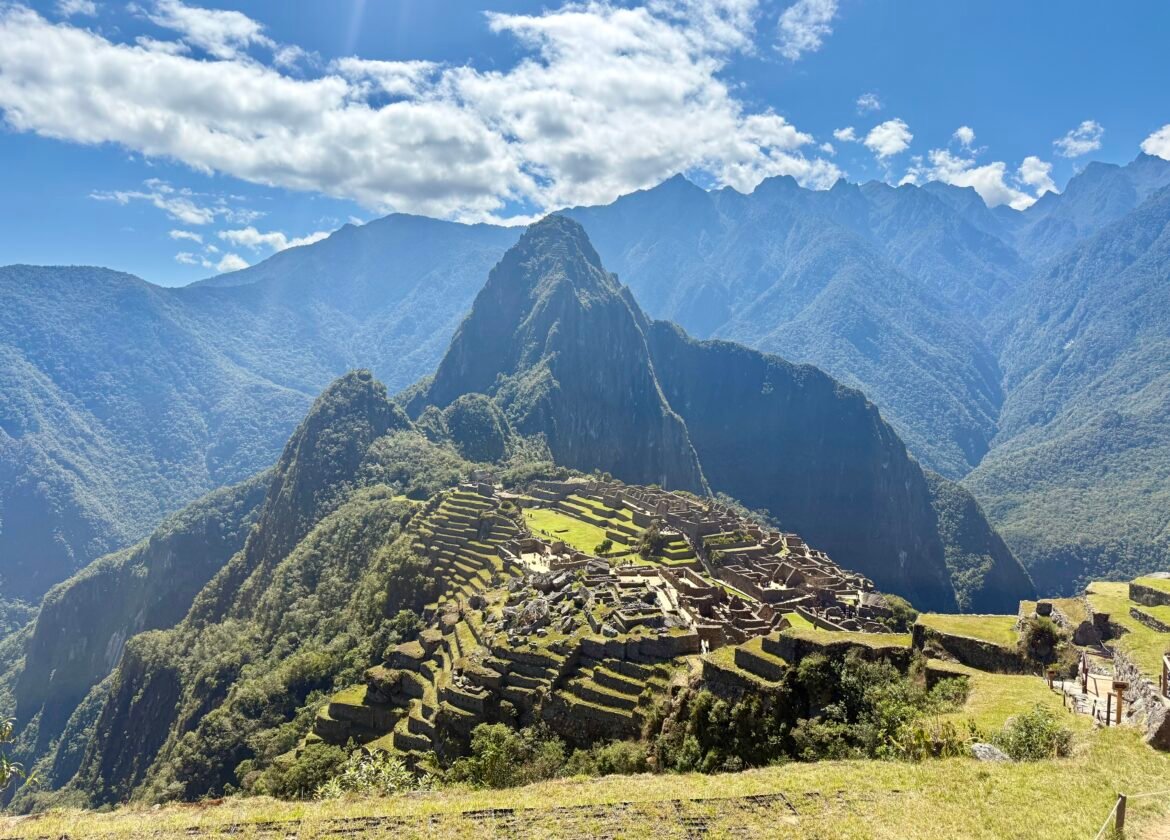
Visiting Machu Picchu had been on my husband's "To Do List" for years, so even though I was initially aiming for Ecuador, I'm thrilled we chose Peru. Because even if this country is less "colorful" than its neighbors, we were blown away. The landscapes were breathtaking and the Peruvian people were lovely.
We took off from Bordeaux, transited through Paris, and then landed in Lima. Upon arrival, we spent a night in the capital, enough time to rest before climbing to altitude.
Day 1: Arrival in Lima
Lima is vast, noisy, and often congested. The journey from the airport to the hotel confirmed our decision to travel without renting a car, opting instead for drivers or taxis, and frankly, I think it was the best decision we made! We're used to traveling independently, but even though it's entirely possible to rent a car in Peru, given the state of the roads, the driving conditions, and the fatigue caused by the altitude, it's more sensible to use cars with drivers, buses, or taxis.
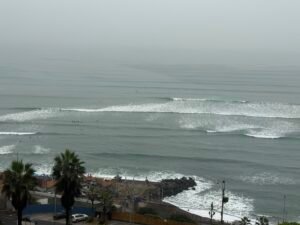
We hadn't planned to visit Lima, but we still made our way to the coast to watch the surfers and then explored the Miraflores district where our hotel, the Hotel Antigua Miraflores, was located. I now understand why Lima is nicknamed the Gray City: Lima is often referred to as the "Gray City." This name comes from its sky, almost always overcast between May and November. During these southern winter months, the capital is enveloped in a layer of low clouds called garúa , a coastal fog caused by the cold Humboldt Current. The result: little or no sun, diffuse light, persistent humidity, but no rain. This constant grayness gives the city a unique atmosphere. In summer, the sky can clear, but this period is short. This contrast explains why, despite its coastal location, Lima is associated with a gray and misty image.
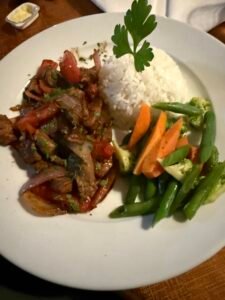
In the evening, we chose to stay for dinner in our hotel's restaurant, which was very highly rated, and I was able to try my first ceviche: delicious!
Days 2 and 3: Arequipa
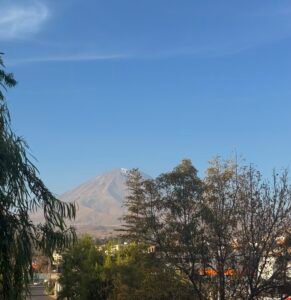
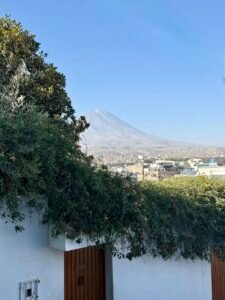
The next day, we took a flight to Arequipa. We had been advised to fly because, firstly, we only had 14 days there, and secondly, the journey is long and the roads can be blocked by demonstrations. Arequipa is located at an altitude of 2,300 meters. The approach to the airport offers a clear view of the Misti and Chachani volcanoes.
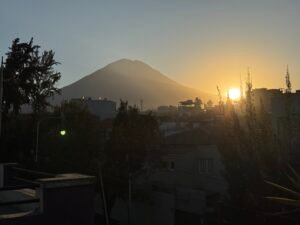
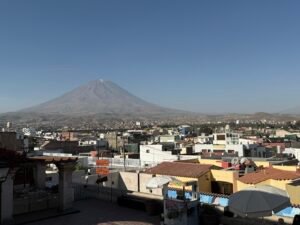
We chose to stay at Casa Arequipa, a small hotel located a 15-minute walk from the city center. It offered excellent value for money, but most importantly, it had a rooftop terrace with a view of the volcano, where we had breakfast.
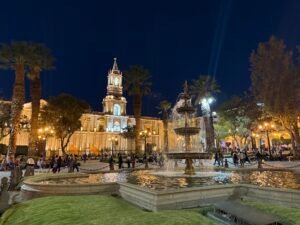
Once there, we took the time to walk through the historic center at nightfall. The white volcanic stone gives the buildings a uniform appearance. Arequipa is truly a magnificent city.
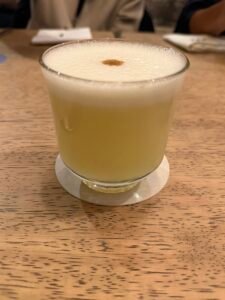
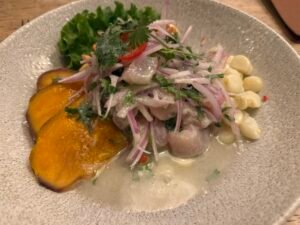
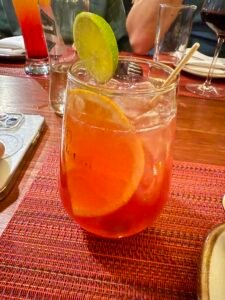
In the evening, we ate at the Chicha restaurant, which is located almost opposite the entrance to the Santa Catalina convent, which we visited the next day. We had a very good meal: alpaca and ceviche were on the menu, grilled, and of course a Pisco Sour to accompany dinner.
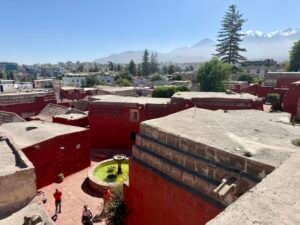
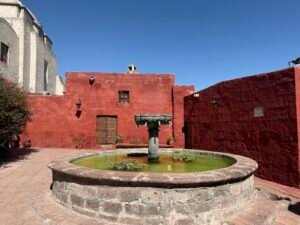
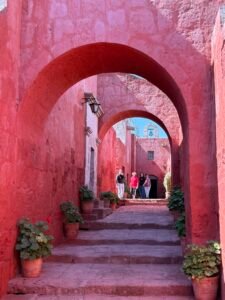
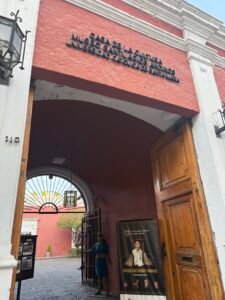
The next day, we visited the Santa Catalina convent. It's a city within a city, organized into cells, courtyards, and cobbled streets. It's truly magnificent and very well restored and preserved.
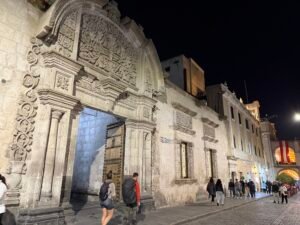
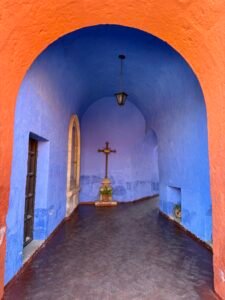
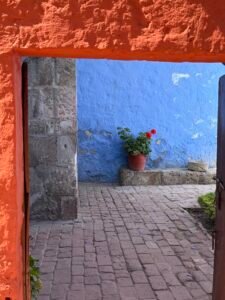
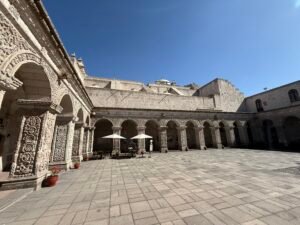
We did a lot of hiking and went for a stroll through the San Camillo market. I really enjoy markets that allow us to see and understand the local way of life. I took the opportunity to buy some coca leaves, which I chewed regularly whenever we reached higher altitudes. We saw a large number of potato varieties (more than 400 in Peru) and also a chicha stand, which we didn't try at that point. Then we visited the Convento de la Recoleta, built by the Franciscans in 1648.
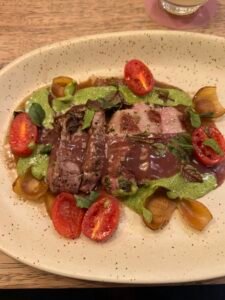
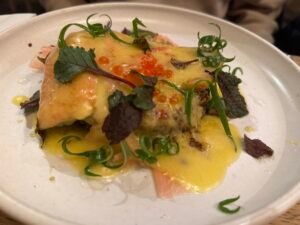
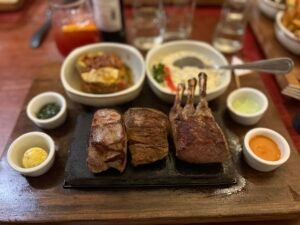
The next day we visited the Santuarios Andinos Museum, where we saw the famous Juanita mummy and learned more about Inca sacrifices. Then we went up into the hills above Arequipa to admire the views of the volcano; we wanted to visit the Convento de la Recoleta, which houses a small but very informative museum, but it was unfortunately closed. In the evening, we had dinner at Restaurant Zig Zag, which offers fusion cuisine from the Alps and the Andes, and we enjoyed delicious meats grilled on volcanic stone, accompanied by mashed potatoes, fries, and quinoa purée. It was truly excellent and beautifully presented.
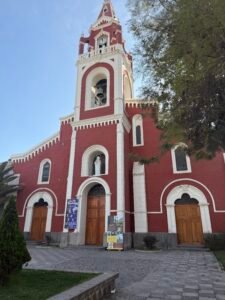
Days 4 and 5: The Colca Canyon
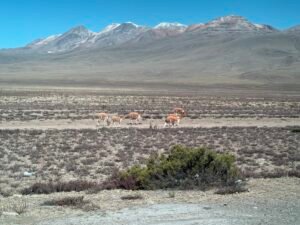
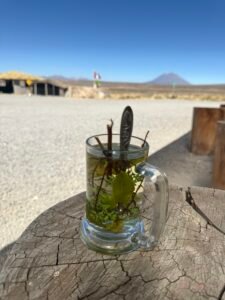
After two nights in Arequipa, a driver took us to Yanque in the Colca Valley. The road crosses a high-altitude area. We saw vicuñas (small wild llamas, the emblem of Peru), llamas, and flocks of sheep. Some sections are over 4,000 meters high. We drank coca tea to lessen the effects of altitude sickness, but the lack of oxygen was still quite intense: we moved very slowly to avoid getting out of breath.
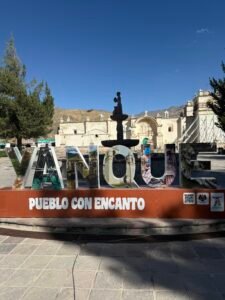
In Yanque, we stayed at the Miskiwasi Bed and Breakfast, a charming little hotel whose rooms overlooked a lovely garden. The air is dry, the nights are cold, but the rooms (not the bathrooms) had small space heaters, and the duvets and blankets kept us warm. The shower water was hot, thankfully, as there was no heating in the bathroom.
Cruz del Condor and hiking
Early in the morning, we set off for the Cruz del Condor viewpoint. Our goal: to observe the condors that use the thermal currents in the canyon. We saw several. Wings outstretched, they glided silently above the void.
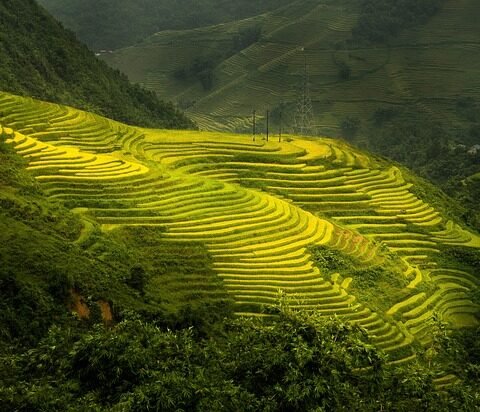
We then went on a few hikes. The elevation gain is significant. The trails run along the canyon and connect small villages. We saw terraced fields, suspension bridges, and a few hot springs. We also did the pleasant short hike to the Inca ruins of Uyo Uyo, starting from Yanque.
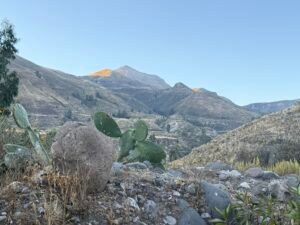
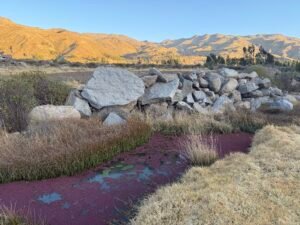
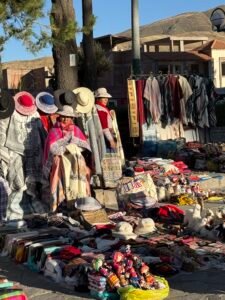
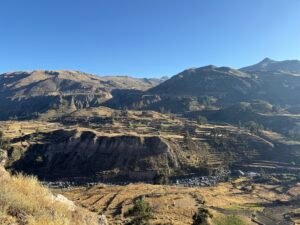
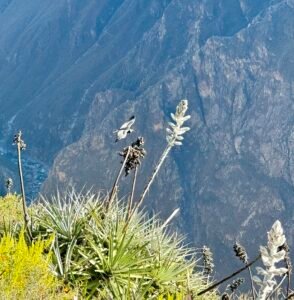
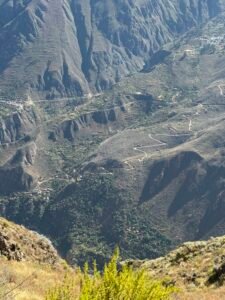
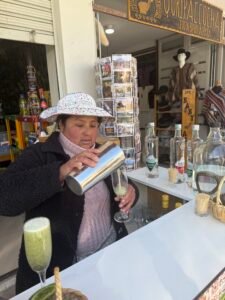
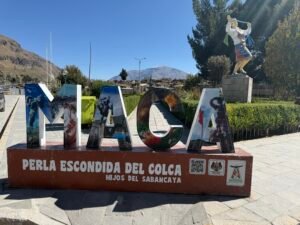
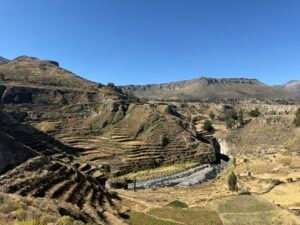
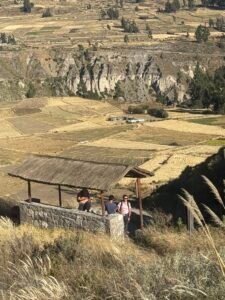
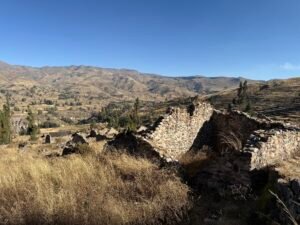
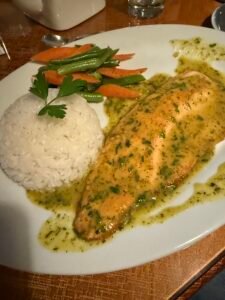
The days in the canyon were full: mornings of walking, lunch breaks in the field, return to the hostel before nightfall to enjoy a good meal of trout or alpaca and fall asleep like a log… before 8:00 p.m.
Practical exercise block – Part 1: Arrival in Lima, Arequipa, Colca Canyon
- Altitude :
- Lima (0 m)
- Arequipa (2,300 m)
- Colca (between 3,500 and 4,000 m)
- Transportation :
- Bordeaux → Paris → Lima: international flight
- Lima → Arequipa: domestic flight (approx. 1 hour 30 minutes)
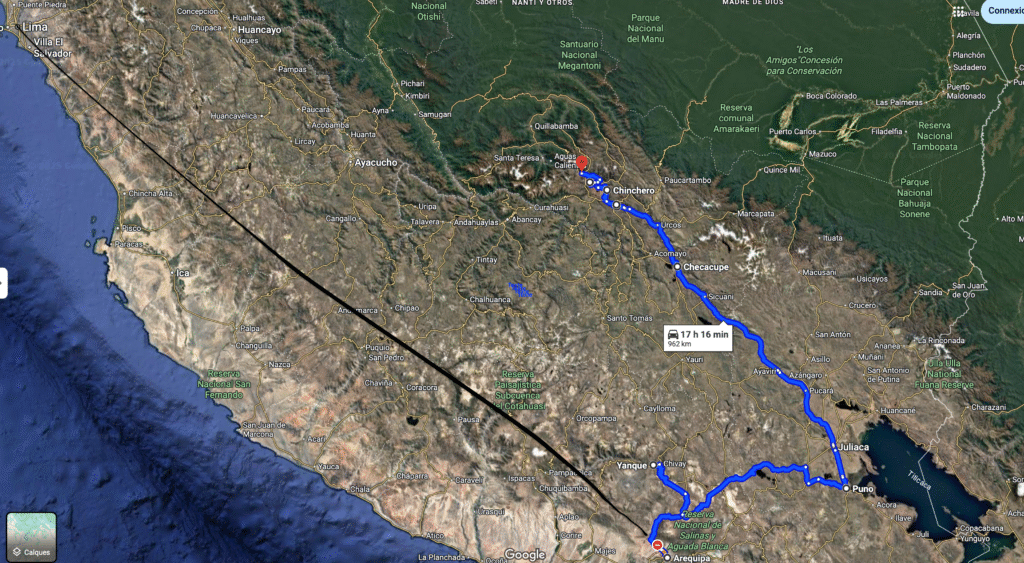
- Arequipa → Yanque: road (approx. 4h30 with possible stop at Patapampa at 4,900 m)
- Sites visited :
- Arequipa: historic center, Santa Catalina convent, Plaza de Armas
- Colca Canyon: viewpoint of the Cruz del Condor, villages of Yanque and surrounding areas
- Advice :
- Plan to spend a night in Lima to ease the long journey and jet lag
- Arequipa is a good place to start acclimatizing to the altitude
- Pack warm clothes for the Colca Valley, especially in the evening and early morning
- Observe the condors early in the morning (best chances between 7:30 and 9:30 am)