Laos, a landlocked country in Southeast Asia, is a hidden gem that fascinates with its ancient history and rich culture. Once known as Lan Xang (the Kingdom of a Million Elephants), Laos flourished between the 14th and 18th centuries before becoming a French colony in the 19th century. The country gained its independence in 1953 and today retains visible traces of its past through its colonial architecture, Buddhist temples, and traditions. Theravada Buddhism plays a central role in daily Laotian life, and the culture is deeply rooted in spiritual practices, festivals like Boun Pha Vet (celebrating the reincarnation of Buddha), and ceremonies marked by offerings at temples.
Laos is also famous for its craft villages where ancient traditions, such as silk weaving and textile production, are still practiced. The simplicity and tranquility of Laotian life make it a perfect destination for those seeking to escape the stresses of modern life.
Traditional Gastronomy and Gluten Free Options
Laotian cuisine is renowned for its fresh and spicy flavors, often based on simple, natural ingredients. Unlike some neighboring cuisines, Laotian cuisine frequently uses glutinous rice, but many dishes are naturally gluten-free or can easily be adapted. Dishes are often accompanied by fresh herbs, chilies, and vegetables, reflecting the harmony between spicy, sweet, and tangy flavors.
Here are some gluten-free Laotian dishes:
- Laap : A salad of minced meat or fish, mixed with fresh herbs, shallots, lime, and spices. This dish, often served with sticky rice or vegetables, is naturally gluten-free.
- Tam mak houng : A salad of shredded green papaya, seasoned with chili, fish sauce, and lime juice. Refreshing and spicy, this salad is an ideal gluten-free option.
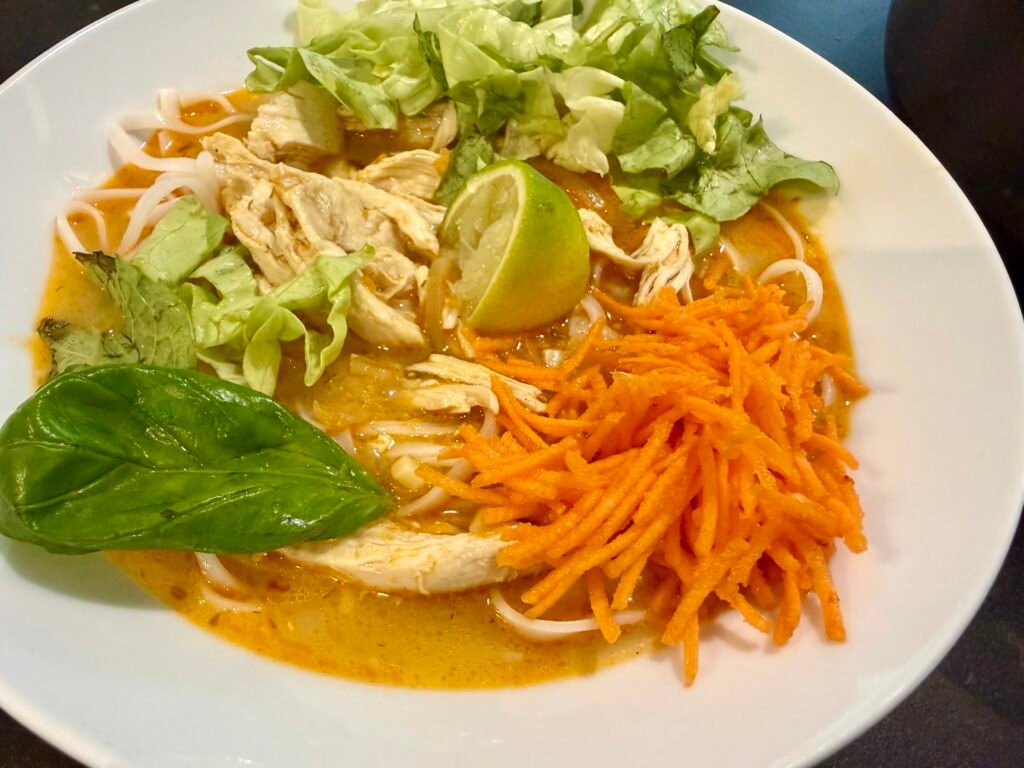
- Khao piak sen : A rice noodle soup in a clear broth, often garnished with chicken, coriander, and lime, perfect for lovers of gluten-free comfort food.
- Mok pa : Fish steamed in banana leaves with herbs and spices, a simple but very tasty dish.
These dishes showcase fresh, locally sourced, and spicy ingredients, perfect for a gluten-free diet.
Must-See Attractions in Laos
Laos is a country of majestic landscapes and historical sites that delight travelers seeking authenticity. Here are a few must-sees to explore:
- Luang Prabang : A UNESCO World Heritage Site, this city is brimming with Buddhist temples and monasteries. The monks' morning alms-giving ceremonies (Tak Bat) are a unique spiritual experience not to be missed.
- Kuang Si Falls : Located near Luang Prabang, these waterfalls offer turquoise pools of water ideal for swimming in a stunning natural setting.
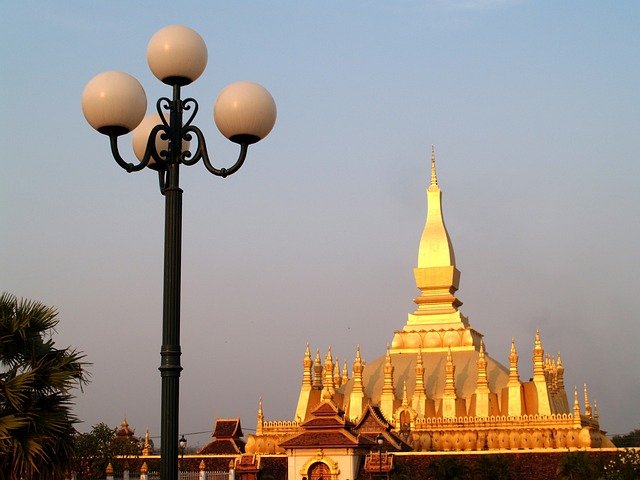
- Vientiane : The capital of Laos is known for its majestic temples like Pha That Luang , the national symbol of Laos, and for its relaxed atmosphere on the banks of the Mekong.
- The 4000 Islands (Si Phan Don) : This region, located in southern Laos, is a true paradise for nature lovers. You will find impressive waterfalls and islands where time seems to stand still.
These sites offer an immersion in the preserved nature and Buddhist spirituality that characterize Laos.