
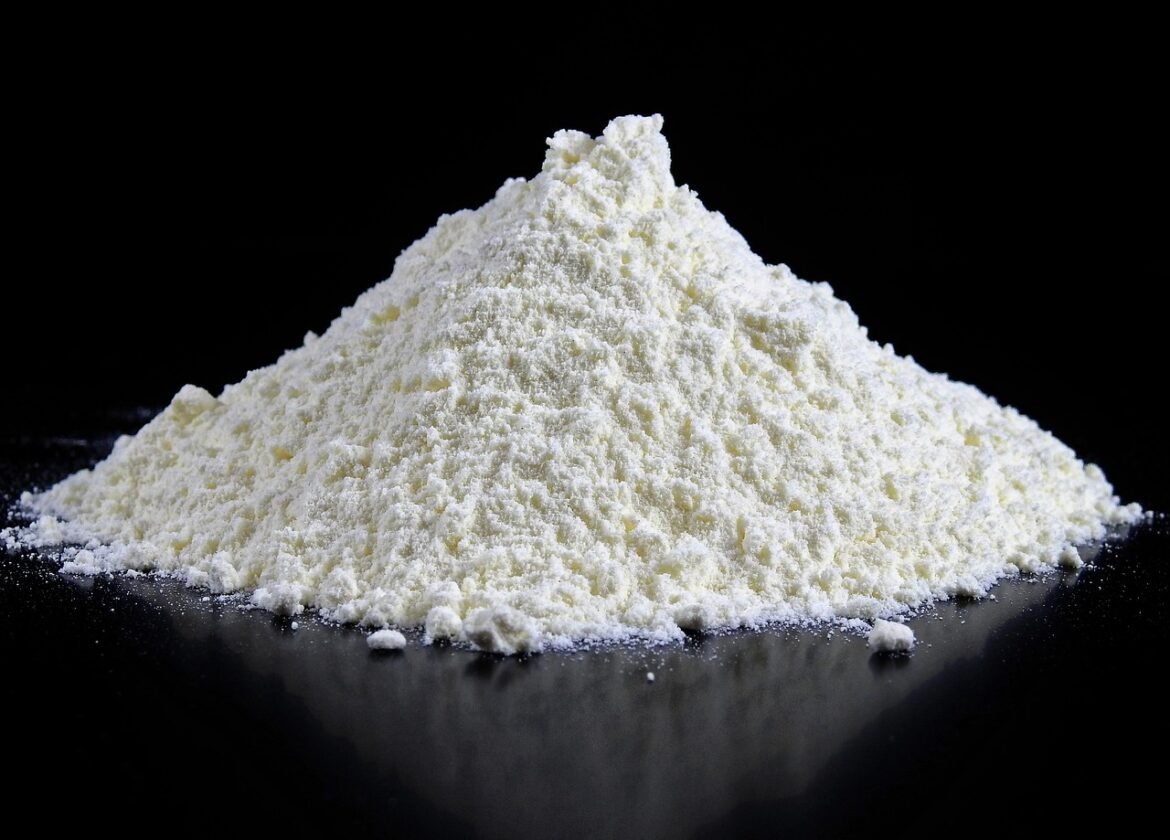
When adopting a gluten-free , the choice of flours and starches becomes essential to ensure balanced nutrition, avoid deficiencies and maintain a low glycemic index .
I've already written an article on gluten-free flours, but in this one I'll focus on the nutritional benefits of each. We'll explore the best gluten-free alternatives , their nutritional advantages, and their ideal uses in cooking.
Why is it important to choose your gluten-free flours and starches carefully?
Unlike wheat flour, which contains gluten and often has a high glycemic index , some gluten-free flours are richer in fiber, protein, iron, magnesium, and zinc . They therefore allow for a balanced diet while avoiding blood sugar spikes.
However, not all gluten-free flours and starches are created equal! Some are more nutritious than others , and their combination allows for optimal textures and flavors in cooking.
Rice flour , which we frequently use, isn't bad for your health, but it should be consumed in moderation, especially in its refined form. For a more balanced diet, it's best to choose wholegrain rice flour , which is richer in fiber, and combine it with other more nutritious flours (buckwheat, chickpea, almond) to balance your nutrient intake. It should also be accompanied by protein and healthy fats to slow down carbohydrate absorption. And above all, avoid excessive consumption , especially if you're trying to regulate your blood sugar.
The best gluten-free flours for health
🥖 For bread: choose flours rich in protein and fiber
| Flour | Benefits |
|---|---|
| Buckwheat flour | Rich in complete proteins and fiber, low glycemic index |
| Teff flour | Rich in iron, calcium, potassium, good for digestion |
| Quinoa flour | Complete proteins, magnesium, iron and B vitamins |
| Chickpea flour | Excellent source of plant-based protein and iron |
| Arrowroot starch | Helps lighten texture, good digestibility |
💡 Ideal mix for gluten-free bread :
50% buckwheat flour + 30% teff flour + 20% arrowroot starch for good texture and better digestibility.
🧁 For baking: soft and nutritious flours
| Flour | Benefits |
|---|---|
| Almond flour | Low in carbohydrates, rich in good fats and fiber |
| Coconut flour | Very high in fiber, helps with satiety, low GI |
| Chestnut flour | Naturally sweet, rich in minerals and antioxidants |
| Tapioca starch | Provides softness and good structure |
| Chickpea flour | Provides a firm and balanced texture |
💡 Ideal blend for light and delicious pastries :
40% almond flour + 40% chestnut flour + 20% tapioca starch .
🥣 To thicken sauces, creams and soups (cornflour substitute)
| Starch / Flour | Benefits |
|---|---|
| Arrowroot starch | Low GI, very digestible, ideal for sauces and creams |
| Tapioca starch | It thickens without adding weight, but should be used sparingly on its own |
| Chickpea flour | Can replace regular flour in sauces |
| Teff flour | Gives a nice texture to soups and thick sauces |
🥧 For quiches and savory tarts: a good texture and a soft, moist consistency
| Flour | Benefits |
|---|---|
| Chickpea flour | Good quality, rich in protein and iron |
| Buckwheat flour | Excellent for a rustic texture and a pronounced flavor |
| Almond flour | It adds softness and a slightly sweet taste |
| Arrowroot starch | Gives lightness to the quiche filling |
💡 Ideal mix for a soft, crustless quiche :
60% chickpea flour + 30% almond flour + 10% arrowroot starch .
🥞 For crepes and pancakes: smooth and light
| Flour | Benefits |
|---|---|
| Buckwheat flour | Ideal for savory crepes, rich in protein and low GI |
| Chestnut flour | Perfect for lightly sweet and indulgent crepes |
| Wholegrain rice flour | It provides lightness, but be aware of the higher glycemic index |
| Arrowroot starch | Allows for a smoother and more homogeneous dough |
| Chickpea flour | A good option for thick savory crepes |
💡 Ideal mix for gluten-free sweet crepes :
50% chestnut flour + 40% buckwheat flour + 10% arrowroot starch .
💡 Ideal mix for gluten-free savory crepes :
50% chickpea flour + 40% buckwheat flour + 10% arrowroot starch .
Comparison of flours according to their nutrient content
| Flour | B vitamins | Iron (mg/100g) | Magnesium (mg/100g) | Zinc (mg/100g) |
|---|---|---|---|---|
| Teff flour | B1, B2, B3, B6 | 5,4 | Pupil | Pupil |
| Buckwheat flour | B6 | 2,1 | 231 | 2,4 |
| Quinoa flour | B1, B2, B6, B9 | 4,6 | 197 | 2,7 |
| Chickpea flour | B1, B6, B9 | 4,5 | 152,7 | 2,6 |
| Almond flour | B2, B3 | 3,7 | 268 | 3,1 |
| Coconut flour | Few Bs | 3,3 | 90 | 2,3 |
💡 The best flours for minerals :
- Iron: teff and quinoa
- Magnesium: buckwheat and almond
- Zinc: quinoa and chickpeas
Conclusion: Which flours and starches should you choose?
1️⃣ If you want nutrient-rich flours :
- Teff flour (iron, calcium)
- Buckwheat flour (magnesium, protein)
- Chickpea flour (protein, iron, B vitamins)
2️⃣ If you are looking to avoid blood sugar spikes :
- Buckwheat, teff and chickpea flour (low GI)
- Arrowroot starch (a healthier alternative to cornstarch)
3️⃣ If you like soft textures in pastries :
- Almond flour, chestnut flour and coconut flour
❌ To limit or balance:
- White rice flour : High glycemic index, low fiber
- Corn flour : Low in nutrients and can be inflammatory if consumed in excess
- Potato starch : very high glycemic index, little nutritional value
💡 Health tip : Always mix several flours to obtain a perfect texture and optimal nutritional intake!
👉 What's your favorite gluten-free flour? Let us know in the comments! 😊
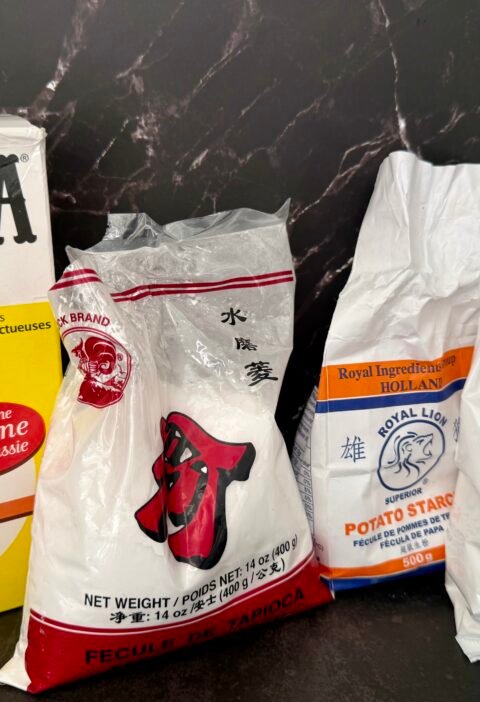

I've already written articles on gluten-free flours and starches, but I wanted to focus on the latter. When you start cooking gluten-free, a […]