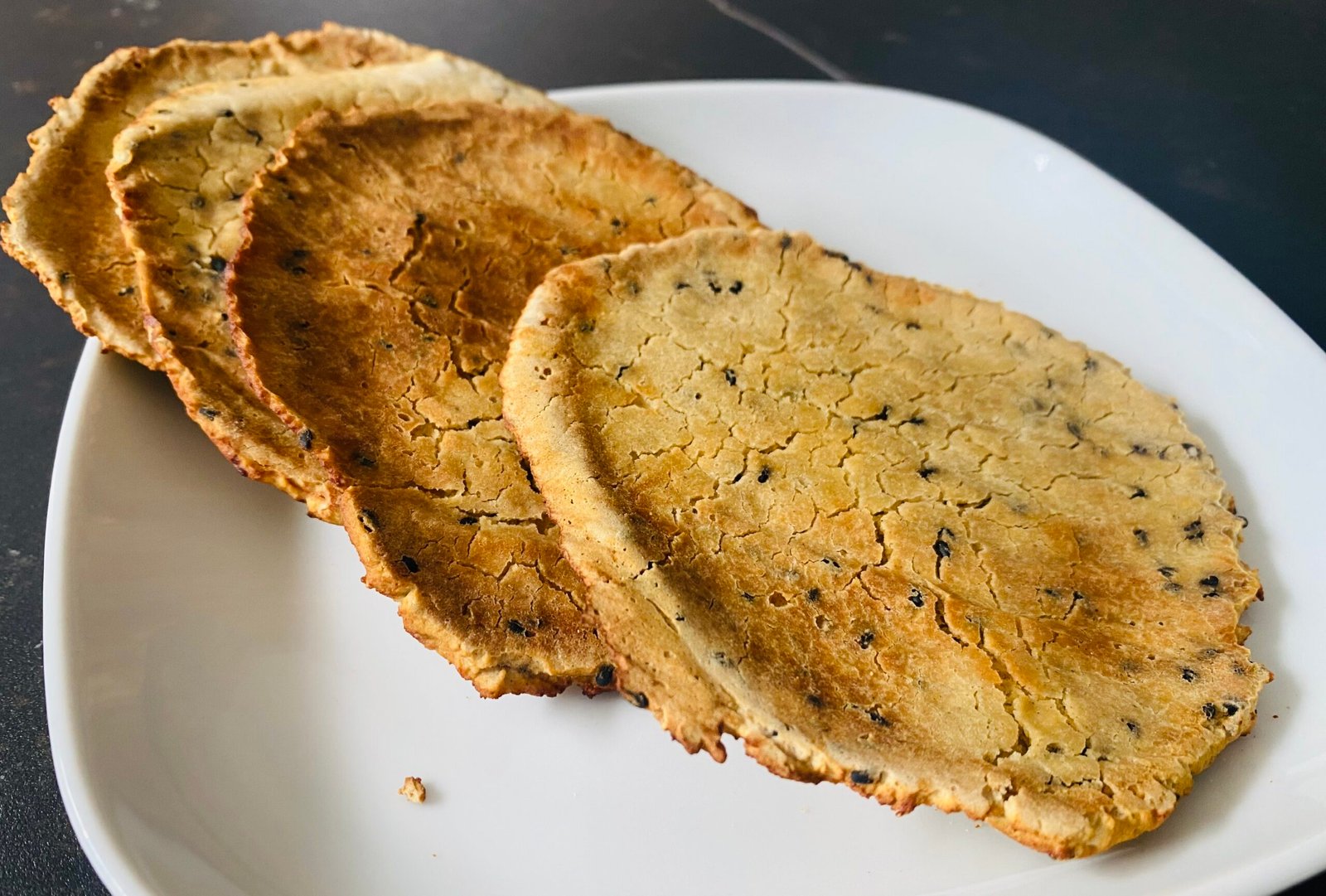
Injera is a traditional Ethiopian flatbread: its texture is slightly spongy and its flavor subtly tangy. This bread is the main accompaniment to many Ethiopian dishes, such as Doro Wat, and it is often used as an edible utensil for scooping food. Made from teff, a naturally gluten-free grain, injera is a staple in Ethiopian and Eritrean cuisine. Its unique fermentation process gives it its distinctive character, making it both nourishing and flavorful. Easy to prepare, this recipe is perfectly suited to gluten-free diets while offering a true immersion in the culinary traditions of East Africa.
Ingredients
Preparation
-
-
Mix the ingredients:
- In a large bowl, mix the teff flour with the warm water to obtain a smooth and slightly runny batter, similar to pancake batter.
- Cover the bowl with a clean cloth or perforated plastic film to allow air to circulate.
-
Allow to ferment:
- Let the dough rest at room temperature for 2 to 3 days , depending on the temperature of your environment.
- During fermentation, small bubbles will form on the surface, and the smell will become slightly sour, a sign that the dough is ready.
-
Prepare the sourdough starter:
- Once the dough has fermented, remove the milky liquid that has formed on top. Then remove a tablespoon of dough to make a starter (called "absit").
- Heat a small amount of water (about 50 ml) and mix in a spoonful of fermented paste to form a thick porridge.
- Let it cool, then stir it into the main fermented dough. This improves the texture and flavor of the injera. You can use a blender to ensure the mixture is smooth.
-
Add the salt and yeast (optional):
- Add a pinch of salt and the yeast if desired. Mix well and let rest for one hour under a clean cloth. Mix again before baking.
-
-
-
Cooking :
- Heat a non-stick pan or a cast iron plate (traditionally, a "mitad" is used).
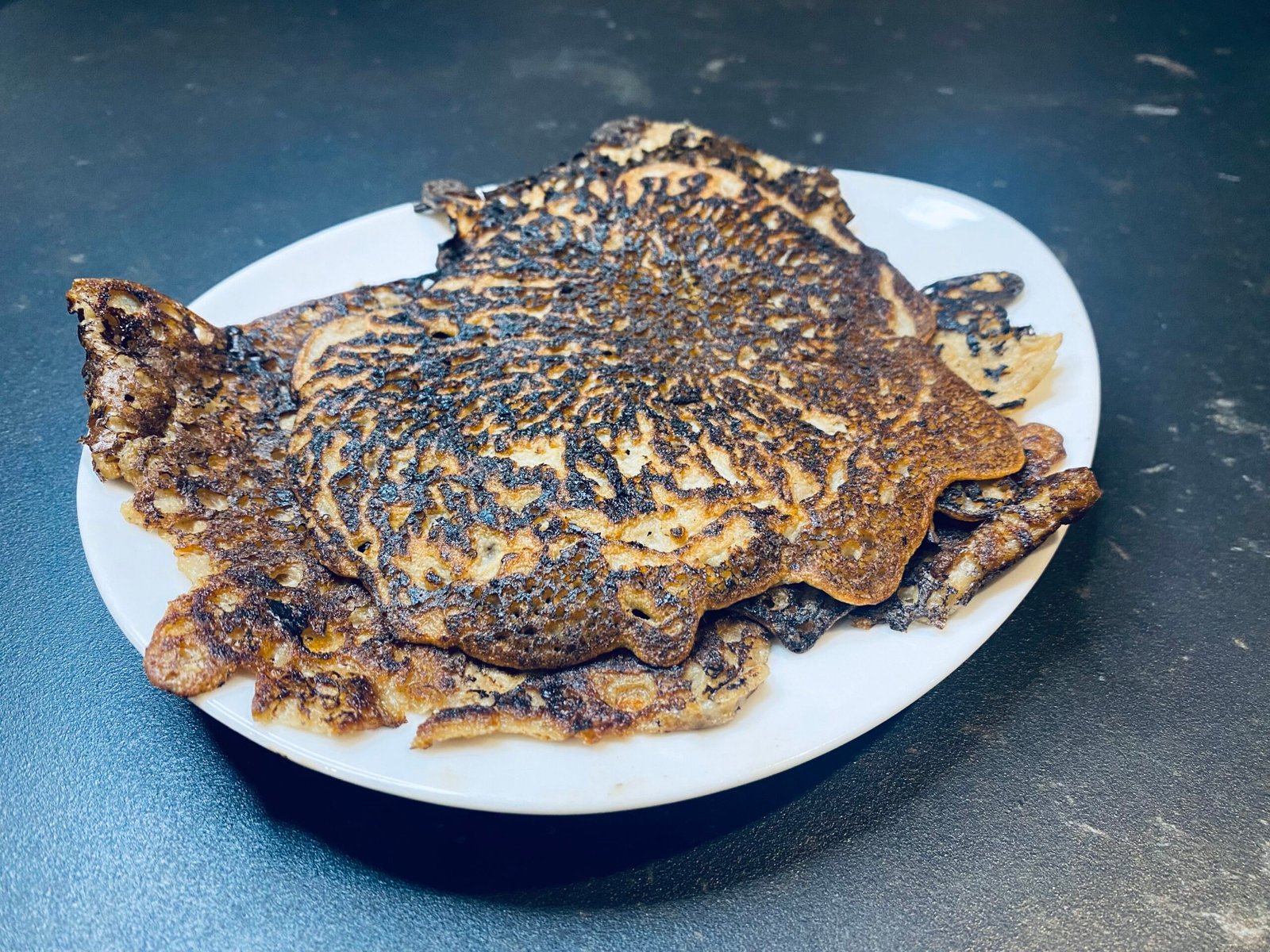
- Pour a small ladleful of batter into the center of the hot pan and tilt it to spread it evenly. The injera should be as thin as a pancake.
- Cover the pan with a lid and cook over low heat until bubbles form across the surface and the top is cooked (about 2 to 3 minutes). Do not flip the injera.
- Gently remove and place the injera on a plate covered with a tea towel to keep it soft.
-
Repeat :
- Continue until all the dough is used.

-
-
Another version of injera: teff and rice flour

Note
To achieve faster fermentation or adjust the acidity, you can leave the dough in a slightly warmer place, or even use some of the fermented dough (starter) to start a new batch, which will result in a more complex flavor over time.
I added 100g of rice flour to half of the dough to try a second type of injera. The flatbread was easier to make. They were also very good, soft but still with the slightly tangy taste of traditional injera.