Chinese New Year, also known as the Spring Festival ( Chūn Jié ), is one of the most important and spectacular festivals in the Asian calendar. This event, rich in traditions and symbols, brings together millions of families around the world. Let's explore its origins, festivities, culinary specialties, and variations in celebration across different countries.
1- What is the Chinese New Year and when is it celebrated?
Chinese New Year, based on the lunar calendar, marks the beginning of a new year according to Chinese tradition. Unlike the Gregorian New Year, celebrated on January 1st, its date varies each year, falling between January 21st and February 20th. In 2025, for example, it will be celebrated on January 29th .
This festival, over 4,000 years old, is deeply rooted in Chinese legends and culture. According to mythology, the monster Nián terrorized villages every New Year, but the inhabitants discovered that it feared the color red, fireworks, and noise. These elements are now ubiquitous in the celebrations to ward off evil spirits and attract good fortune.
The festivities and events
The family is at the heart of the celebration
Family reunions are the most important aspect of Chinese New Year. Family members, often scattered, come together to share warm moments.
New Year's Eve Meal (年夜饭, Nián Yè Fàn)
- This is the central event of the festival, where a large feast is prepared.
- The dishes served, such as dumplings, whole fish or longevity noodles, all have symbolic meaning.
- Generations gather around the table, strengthening family ties.
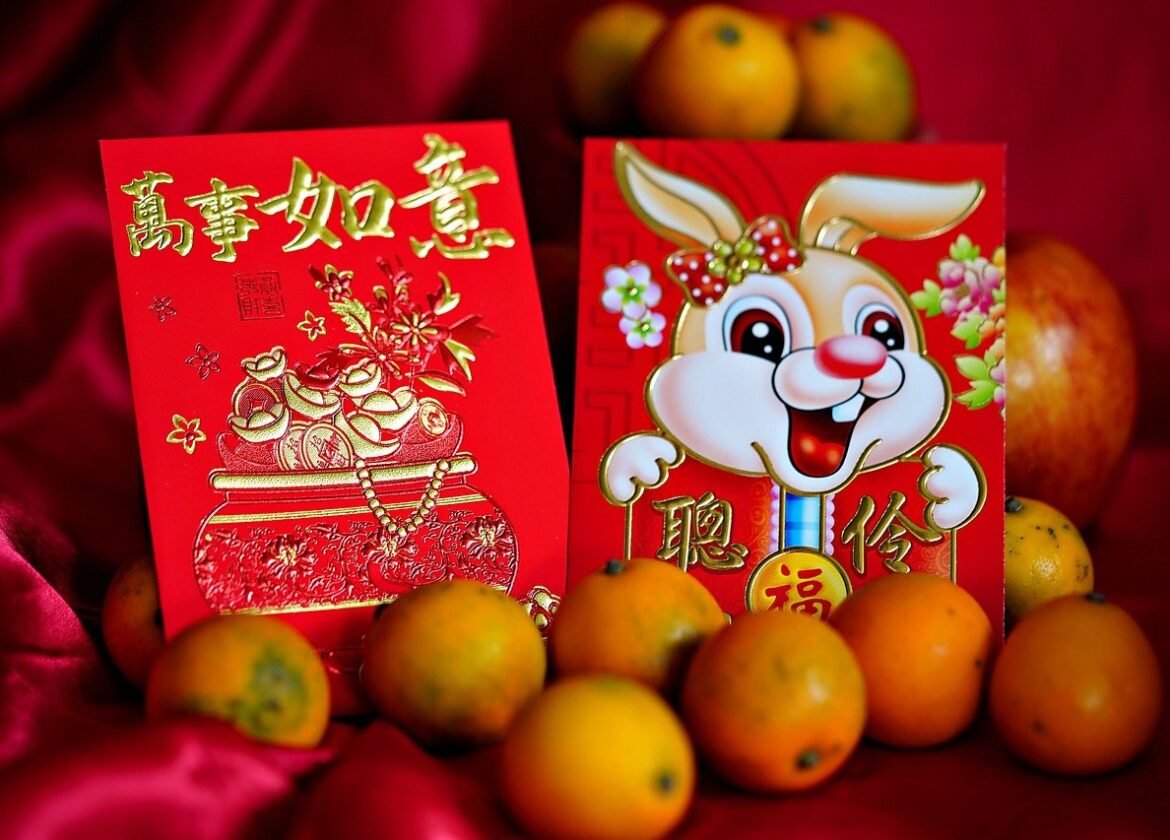
Exchange of gifts and red envelopes (红包, Hóngbāo)
- The elders give red envelopes filled with money to the younger ones to wish them luck and prosperity.
- These gifts are accompanied by sincere wishes for a happy year.
2- Culinary specialties
Food plays a central role in Chinese New Year celebrations. Each dish is carefully chosen for its symbolism and its connection to wishes for prosperity, happiness, and longevity. Here are some of the most popular dishes for this holiday:
1- Pork dumplings (Jiǎozi)
- Symbol : Wealth and prosperity.
These ravioli shaped like gold bars symbolize wealth and prosperity. They are often prepared as a family activity, strengthening the bonds between generations.
2. Longevity noodles (Chángshòu Miàn)
- Symbol : Longevity and happiness.
These long, uncut noodles symbolize a long and happy life. Eating them requires care, as breaking a noodle is said to bring bad luck.
3. Whole steamed fish (Zhēng Yú)
- Symbol : Abundance.
The word “fish” (鱼, Yú ) is a homonym for “excess” or “abundance.” A whole fish is served to ensure a year full of opportunities and success.
4. Sweet ravioli with black sesame (Tāng Yuán)
- Symbol : Family reunion.
- Sticky rice balls stuffed with sweet black sesame, served in a light broth.
5. Whole roasted or steamed chicken (Quán Jī)
- Symbol : Harmony and family unity.
- The chicken is served whole, with the head and feet, marinated with Chinese spices, steamed or roasted, then brushed with sesame oil.
6. Sticky rice cake (Niángāo)
- Symbol : Elevation and success.
This dessert represents elevation and success, as its name means “high year” (年高).
7. Sautéed prawns (Xiā)
- Symbol : Happiness and laughter.
- A simple and quick recipe for stir-fried shrimp with garlic, ginger and chili.
8. Spring rolls (Chūn Juǎn)
- Symbol : Wealth and prosperity.
These rolls, prepared with rice paper (instead of classic dough), evoke gold ingots and symbolize wealth.
9. Hot Pot or Chinese fondue (Huǒ Guō)
- Symbol : Unity and sharing.
- A Chinese hot pot prepared with a light, spicy broth in which a variety of fresh ingredients such as tofu, vegetables, shrimp, and thin meats are cooked.

Why are these dishes so symbolic?
The Chinese language is full of homonyms, and many dishes are chosen for their pronunciation, which evokes wishes for happiness, luck, or wealth. Furthermore, these dishes are often prepared as a family activity, fostering unity and sharing.
Find all the Chinese recipes
3- What are the variations in Chinese New Year celebrations?
Although deeply rooted in China, Chinese New Year is also celebrated in many countries in Asia and beyond, often with local variations in traditions and cuisine.
1. Hong Kong and Taiwan
The celebrations are very similar to those in mainland China, with a particular emphasis on fireworks, lion dances, and flower markets. In Taiwan, temples offer special rituals to bless the new year.
2. Singapore and Malaysia
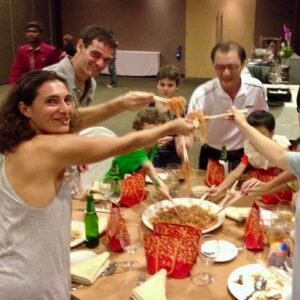
These countries host spectacular festivals with colorful parades, such as the famous Chingay Parade in Singapore. Lo Hei , a salad of raw fish and vegetables, is a unique tradition in these regions, symbolizing collective prosperity.


3. Vietnam (Tet)
The Vietnamese New Year, called Tet , is heavily influenced by the Chinese New Year, but with local specialties like Bánh chưng (stuffed sticky rice cake).
4. Korea (Seollal)
In Korea, families also celebrate the Lunar New Year with dishes like Tteokguk (rice cake soup) to symbolize growth and age.
5. In the West
In cities like London, New York, and Paris, Chinatowns come alive with parades, dragon shows, and special menus in restaurants. Local adaptations often incorporate influences from local cuisine.
4- The customs, traditions and festivities of the Chinese New Year
Exchange of gifts and red envelopes (红包, Hóngbāo)
- The elders give red envelopes filled with money to the younger ones to wish them luck and prosperity.
- These gifts are accompanied by sincere wishes for a happy year.
Lion and Dragon Dances
- These spectacular dances, accompanied by drums, cymbals and gongs, are highlights of the celebrations.
- The lion and the dragon symbolize luck, strength and wisdom, and their dances serve to chase away evil spirits.
Fireworks and firecrackers
- Fireworks light up the sky from New Year's Eve onwards. Firecrackers, on the other hand, are used to ward off the legendary evil spirit Nián .
- This festive uproar also symbolizes a vibrant and joyful new beginning.
New Year's Parades and Markets
- Large cities organize colorful parades, where locals and visitors mingle to celebrate.
- New Year's markets are overflowing with decorations, flowers, and culinary specialties related to the holiday.
Cleaning and decorating
- Before the New Year, houses are thoroughly cleaned to chase away the bad luck of the previous year.
- Red decorations, such as lanterns, banners, and Chinese characters for luck ( fu , 福), are hung everywhere.
Exchanging tangerines or oranges: an act of goodwill
- During visits to family or friends, it is common to give tangerines or oranges as gifts. This gesture is a sign of respect and a wish for happiness for the recipient.
- Mandarins are often exchanged in pairs because the number two symbolizes luck in Chinese.
Conclusion: Chinese New Year is much more than a holiday; it is a celebration of family, culture, and ancestral traditions. With its richly symbolic culinary specialties and variations around the world, it sends a universal message of hope and prosperity for the coming year: Gong Xi Fa Cai!