
If there's one pillar that defines menopause in the collective consciousness, it's hormonal balance . It's what controls our thermostat, our mood, and our internal rhythm. When this pillar falters, it feels like our body is no longer obeying us.
At GlutenEvasion , we believe that understanding this hormonal dance is the first step to regaining control. Let's see how nature, and in particular a well-chosen gluten-free plate, can become your best ally.
What is hormonal balance during menopause?
Simply put, your body is switching from a "centralized" management system (the ovaries producing estrogen and progesterone) to a "decentralized" management system. Your adrenal glands and fatty tissues must take over, but this transition is not without its challenges.
Why this imbalance?
The drop in progesterone (the calming hormone) often precedes that of estrogen (the energy hormone). This discrepancy creates a relative “estrogen dominance” that disrupts the hypothalamus, the conductor of your brain. The result: the signal is scrambled.
Symptoms: Beyond hot flashes
Hormonal imbalance isn't just about hot flashes. It's a fundamental factor that influences everything you feel:
- Hot flashes and night sweats: Your internal thermostat is going haywire for no reason.
- Irritability and emotional roller coasters: You go from laughter to tears or anger in a flash.
- Menstrual cycle disorders (in perimenopause): Periods that become irregular before disappearing.
- Palpitations: That strange sensation that your heart races at rest.
World Cuisine: Your “Hormone-Like” Ingredients
To stabilize this pillar, we will look for ingredients that gently mimic the missing hormones or that help the liver eliminate the “bad” hormones.
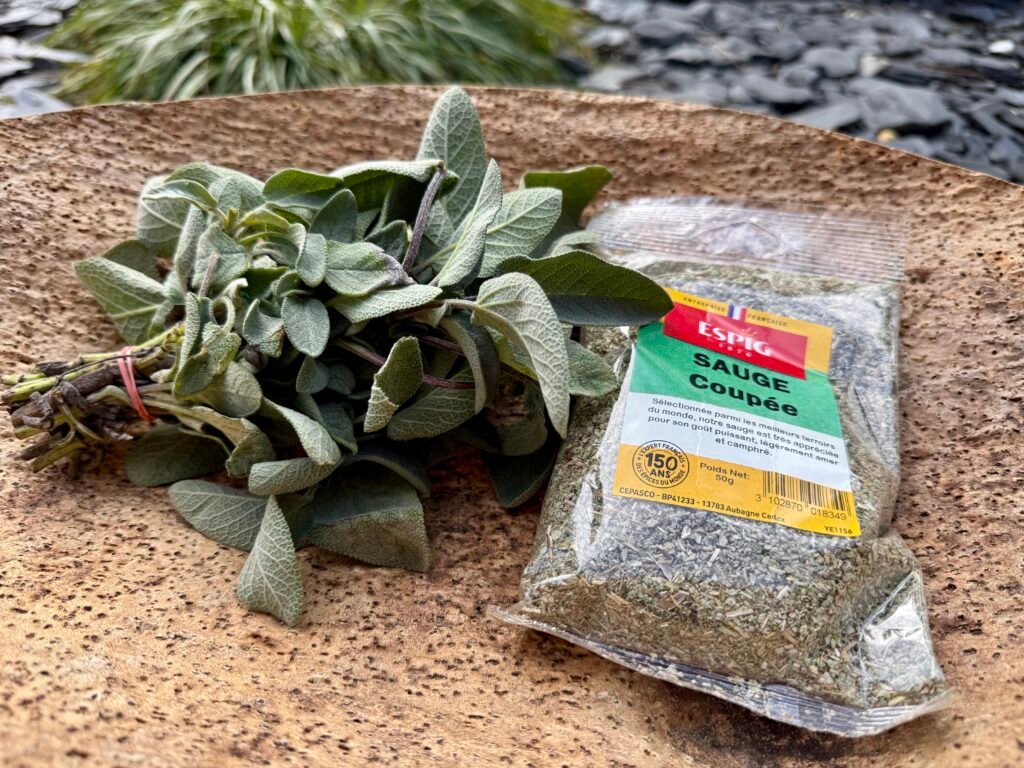
1. Sage (Mediterranean Basin): The plant of women
Sage is rich in phytoestrogens. It is particularly famous for regulating excessive sweating.
- In the kitchen: Prepare an infusion of fresh sage leaves with a dash of lemon, or incorporate it into your roasted squash dishes.
2. Fermented Soybeans (Asia): The natural “mimetic”
Soy contains isoflavones which have a structure similar to our estrogens. They occupy cellular receptors to send a calming signal to the body.
- GlutenEvasion's tip: fermented forms (Tamari, gluten-free Miso, Tempeh) which are much easier to digest and don't irritate the intestines. Tamari is your ideal ally for replacing salt while providing essential amino acids.
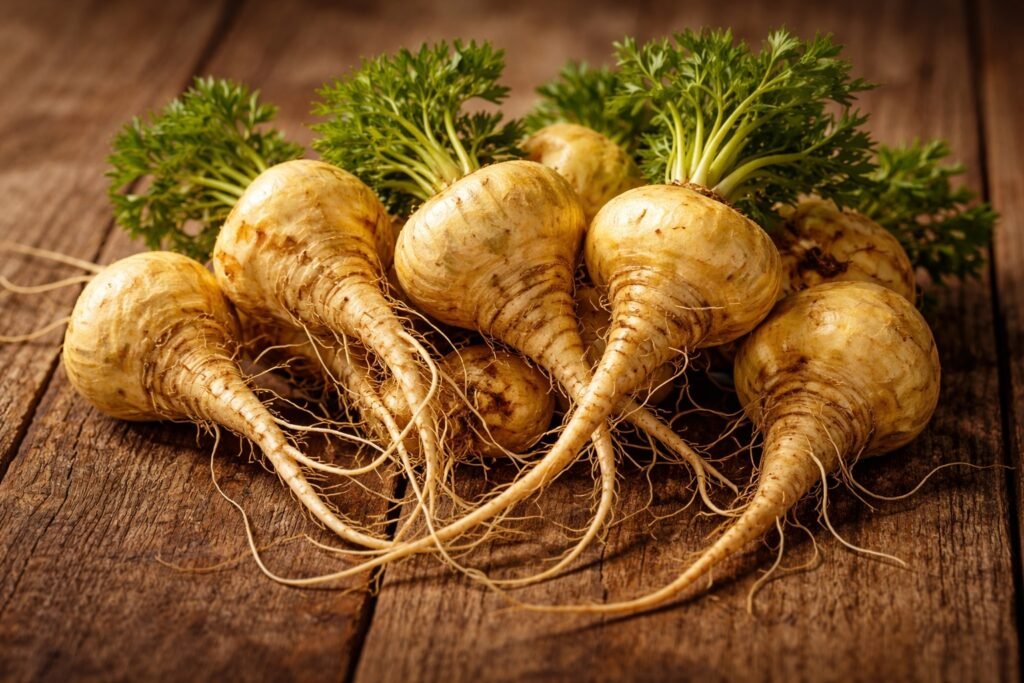
3. Maca (Peru): The adaptogenic root
Maca does not contain hormones, but it "nourishes" the endocrine system to help it balance itself. It is a powerful energy regulator.
- In the kitchen: Its slightly malty flavor pairs wonderfully with an almond milk smoothie or in a gluten-free buckwheat porridge.
4. Shatavari (India): The treasure of Ayurveda
Its name means “she who has a hundred husbands.” It is the plant of feminine youth. It helps to temper excess heat (Pitta) and supports hormone production.
- In cooking: Shatavari is often found in powder form. Half a teaspoon in your morning hot drink is enough.
5. Broccoli and cabbage (Europe): Hormonal cleansing
They contain DIM (diindolylmethane), a molecule that helps your liver recycle estrogen. A healthy liver is key to a strong hormonal foundation.
- In the kitchen: To be eaten steamed or crunchy in salads to preserve nutrients.
The link between gluten and hormones: What you need to know
Why is gluten-free so central here? Dr. Alessio Fasano has shown that gluten can induce intestinal inflammation via zonulin . This inflammation is a major stress for the body.
When your body is stressed, it produces cortisol . The problem? Cortisol is made from the same "raw material" as your sex hormones. If you consume gluten, which triggers inflammation, your body "steals" resources meant for estrogen to produce cortisol. By eating gluten-free, you free up more resources for your hormonal balance!
📚 Scientific sources in brief
- On zonulin and inflammation: Fasano A. “Zonulin, a regulator of epithelial and endothelial barrier functions, and its involvement in chronic inflammatory diseases.” Physiological Reviews, 2011.
- On Maca and hormones: Meissner HO, et al. “Therapeutic Effects of Pre-Gelatinized Maca on Emotional Well-Being and Physical Symptoms in Postmenopausal Women.” Int. J. Biomed Sci, 2006.
- On sage and sweating: From Leo V, et al. “Treatment of neurovegetative menopausal symptoms with a phytotherapeutic agent.” Minerva Ginecol, 1998.
- On soy and menopause: Taku K, et al. “Extracted or synthesized soybean isoflavones reduce menopausal hot flash frequency and severity: a systematic review and meta-analysis.” Menopause, 2012.
Disclaimer: The information in this article is shared for educational purposes. Every metabolism is unique. For any therapeutic treatment or if severe symptoms persist, consult a healthcare professional or a qualified naturopath.