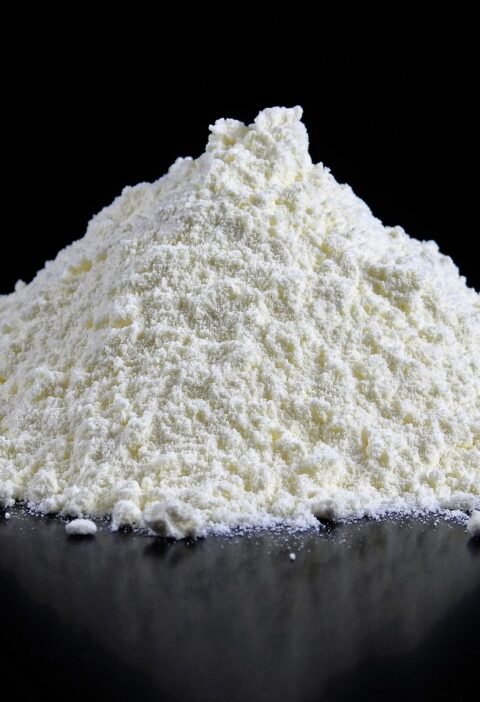
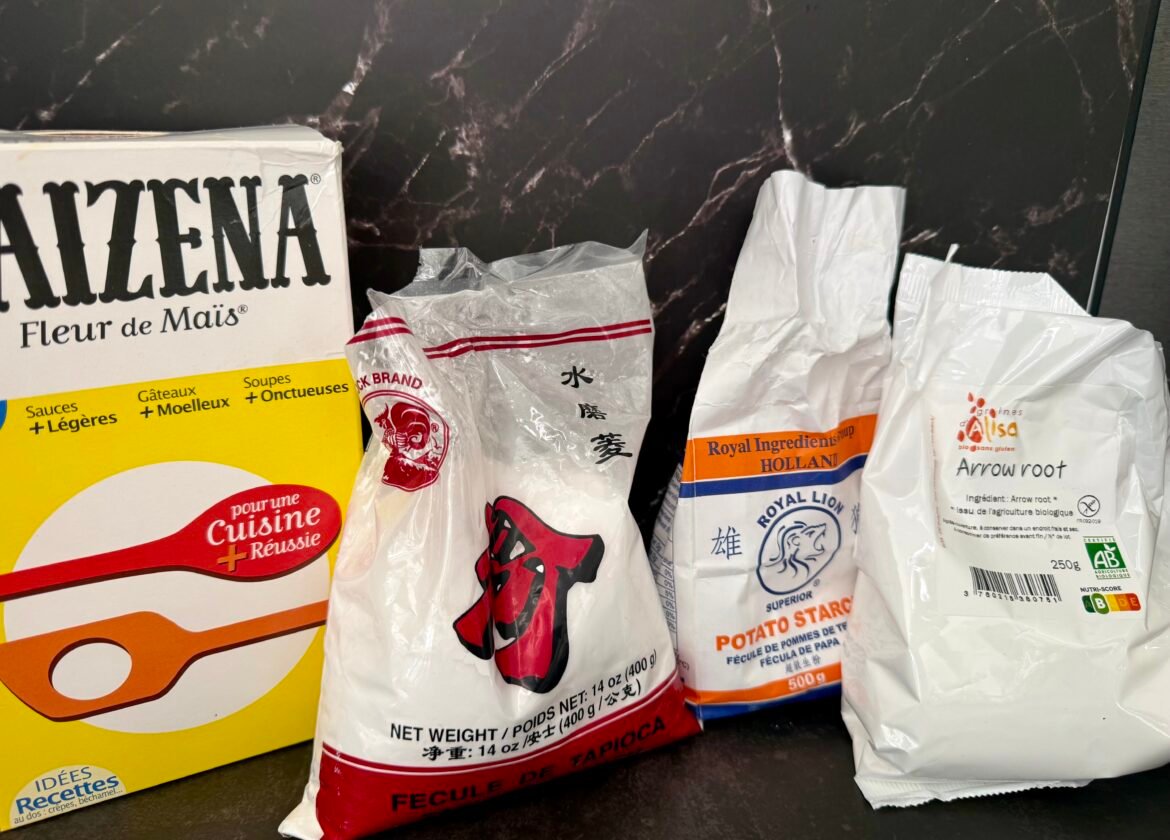
I've already written articles about gluten-free flours and starches , but I wanted to focus on the latter. When you start cooking gluten-free, one question always comes up: why do we use so many starches in recipes? And above all, which ones should you choose for healthy cooking?
Starches play a key role in the success of gluten-free breads, cakes, cookies, and pancakes. They partially replace the functions that gluten naturally provides: binding, lightness, elasticity, and a soft texture . Without them, doughs are often dense, dry, or crumbly. Here's a simple guide to understanding how they work, which ones to favor, and how to use them every day.
Most gluten-free mixes sold in supermarkets contain between 40% and 70% starches , sometimes even more. This very high proportion allows for a light and airy texture… but it comes at a nutritional cost. Starches are refined , low in fiber, vitamins, and minerals, and have a high glycemic index . As a result, these mixes are convenient but not very nutritious and can cause a rapid spike in blood sugar. Brands use a lot of starches because they are cheap , easy to work with, and guarantee a texture similar to wheat, but this doesn't reflect the needs of a healthier gluten-free diet. A balanced mix should contain around 20% to 40% starches , leaving more room for whole-grain flours, which are richer and more filling.
🍞 Why do we use starches in gluten-free cooking?
1. They bring lightness
Gluten-free flours are often denser (buckwheat, brown rice, teff, almond, etc.).
Starches lighten the dough and give it a more airy texture.
Without starch, cakes are heavy and breads are very dense.
2. They replace part of the role of gluten
Gluten traps air, makes the dough rise, and creates an elastic crumb.
Starches don't recreate gluten, but they:
- improving the binder,
- stabilize the pasta,
- help the dough to rise,
- prevent everything from falling apart.
3. They add softness
Starches retain moisture and prevent the dough from drying out.
As a result, breads and cakes stay soft longer , even the next day.
4. They improve cooking
They allow for more even cooking and sometimes give a light crust or a softer crumb depending on the starch used.
🥄 Which starches should be used in gluten-free recipes?
Not all starches provide the same texture or nutritional value. Here is a summary table with the most common ones and their advantages and disadvantages.
| Starch | Glycemic Index (GI) | Nutritional value | Role in gluten-free cooking | When to use it | Health notes |
|---|---|---|---|---|---|
| Sweet potato | 55–60 | Provides fiber, beta-carotene and some resistant starch | It gives a soft texture and a beautiful crumb | Breads, cakes, muffins, pastries | ⭐ Best health choice |
| Arrowroot | ≈65 | Very digestible, gentle on the intestines, light | Thickens without weighing it down, smooth texture | Creams, sauces, desserts, biscuits | ⭐ Moderate GI, excellent daily |
| Tapioca / Cassava | ≈85 | Very low in nutrients but very texturizing | Provides elasticity and lightness | Breads, pizzas, airy cakes | Use in small quantities |
| Rice starch | ≈85 | Low in nutrients, refined | Gives a "fine and smooth" feel | Biscuits, shortbread, light cakes | May raise blood sugar |
| cornstarch | 85–95 | Highly refined, virtually no nutrients | Lightens cakes, thickens | Creams, biscuits, cakes | Very high GI → to be limited |
| Potato starch | 90–95 | Very binding, very light | Makes it swell, gives it volume | Breads, brioches, pizza dough | Best served chilled (resistant starch) |
🧁 What proportion of starch should I put in a mix?
A good gluten-free mix generally contains 20 to 40% starches , depending on the recipe.
- Breads and pizzas : 20–30 %
- Cakes and muffins : 30–40 %
- Light biscuits and cakes : up to 40%
Too much starch results in a high glycemic index and a dry texture.
Not enough results in compact and crumbly pasta.
🍽️ How to use them properly?
✔ Mix several starches to mimic gluten
Example of a versatile combo:
- 50% arrowroot or sweet potato (moist + nutritious)
- 30% tapioca or potato (elasticity / binder)
- 20% rice (fine texture)
✔ Always combine starches with nutritious flours
They contain few vitamins or minerals.
Combine them with:
- buckwheat
- brown rice
- teff
- millet
- quinoa
- almond
✔ Adjust according to the desired result
- Soft → sweet potato
- Elasticity → tapioca
- Neutral taste → arrowroot
- Lightness → rice
- Bread that rises well → potato + tapioca
Can starches be replaced entirely or partially?
Starches are not essential in all gluten-free recipes, but they play an important technical role. They can therefore be reduced , replaced , or omitted , depending on the type of preparation.
✔️ 1. Partially replace them: YES (and it's even recommended)
It is perfectly possible to reduce the amount of starch by adding naturally light or starch-rich flours, such as:
- white or semi-wholemeal rice flour
- millet flour
- tiger nut flour
- chestnut flour (in small quantity)
- quinoa flour (small proportion, texture)
- gluten-free oat flour
This results in a more nutritious dough while maintaining a pleasant texture.
👉 In practice:
You can go down to 10–25% starch in a homemade mix, instead of the 40–70% of industrial mixes.
✔️ 2. Replace them completely: YES, but only in certain recipes
You can remove all starches from:
- dense loaves (Nordic bread type)
- cakes or moist but rich pastries (banana, compote, plant-based yogurt)
- shortbread cookies
- galettes, pancakes, thick crepes
- almond-based pastries (financiers, fondants)
Because the texture depends on other elements: fats, eggs, fruit purees, almonds, raising agents.
👉 Example: a soft gluten-free cake can work very well without any starch if you add compote, plant-based yogurt or a little almond puree.
⚠️ 3. Removing them from leavened bread: very difficult
For slightly airy gluten-free bread, starches are difficult to eliminate completely because they replace part of the action of gluten:
- swelling
- elasticity
- soft crumb
- humidity
Without starch, the bread becomes very dense.
You can reduce it to 15–20% , but rarely go to 0% if you want an airy crumb.
✔️ 4. Replace them with healthier alternatives
To reduce refining and the glycemic index, you can replace certain starches with:
- sweet potato flour (adds softness + fiber)
- arrowroot (lower GI, very digestible)
- semi-wholemeal rice flour (light but nutritious)
- natural resistant starch (green banana powder)
👉 This gives the same technical effect with better nutritional value .
📝 Conclusion
Starches are essential for successful gluten-free baking. They compensate for the absence of gluten by providing lightness, softness, and elasticity. When chosen and used in the right proportions, they allow you to create breads and cakes similar to traditional versions, while maintaining a healthier approach.
Understanding their role and differences helps you create balanced, tasty recipes tailored to your needs.